- Welcome to Brown instruments (Jiangsu) Co., Ltd official website!

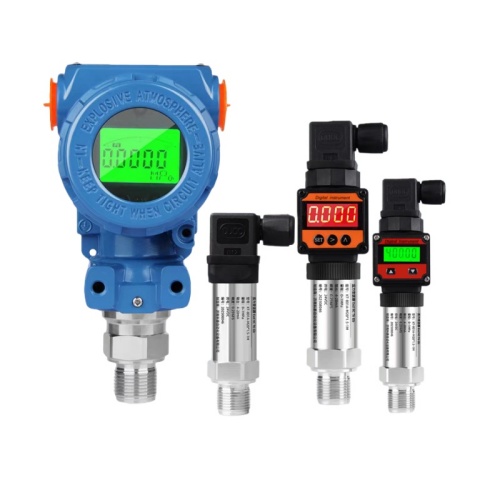
pressure sensor is a device capable of detecting pressure signals and converting them into usable electrical signals. It typically consists of a pressure-sensitive element and a signal processing unit. The primary function of a pressure sensor is to measure pressure in gases or liquids and convert it into an electrical signal for monitoring and control purposes. Pressure sensors are among the most commonly used sensors in industrial practice. They are extensively applied across various industrial automation environments, spanning numerous sectors including water conservancy and hydropower, rail transportation, smart buildings, production automation, aerospace, military, petrochemicals, oil wells, power generation, marine vessels, machine tools, and pipelines.
Product Overview:
A pressure sensor is a device capable of detecting pressure signals and converting them into usable electrical signals. It typically consists of a pressure-sensitive element and a signal processing unit. The primary function of a pressure sensor is to measure pressure in gases or liquids and convert it into an electrical signal for monitoring and control purposes. Pressure sensors are among the most commonly used sensors in industrial practice. They are extensively applied across various industrial automation environments, spanning numerous sectors including water conservancy and hydropower, rail transportation, smart buildings, production automation, aerospace, military, petrochemicals, oil wells, power generation, marine vessels, machine tools, and pipelines.
Product Types:
Based on different measurement requirements, pressure sensors can be categorized into the following types:
Absolute Pressure Sensor: Measures absolute pressure relative to vacuum.
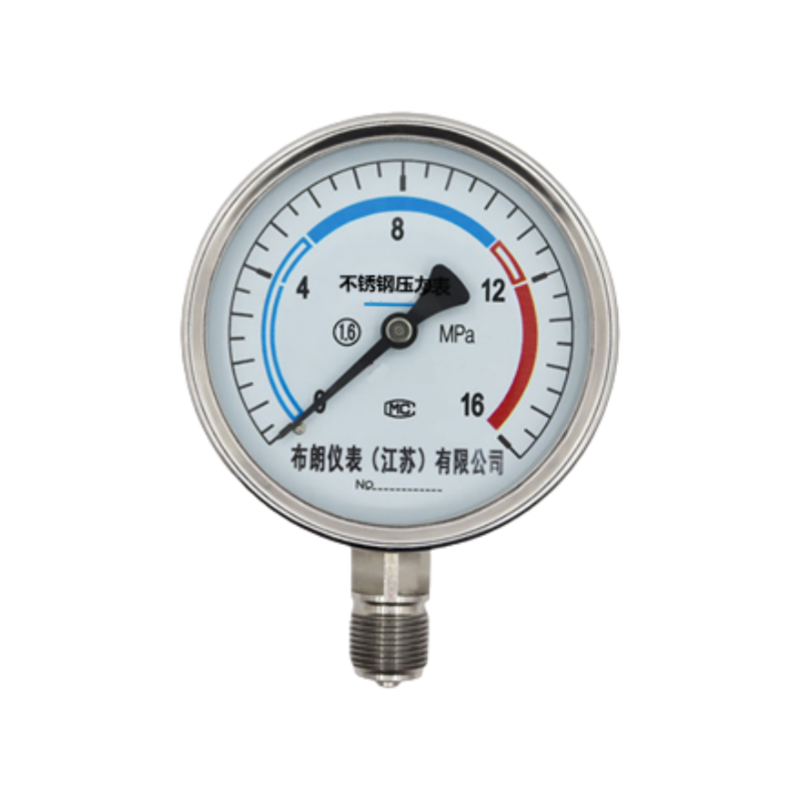
Gauge Pressure Transducers: Measure pressure relative to atmospheric pressure.
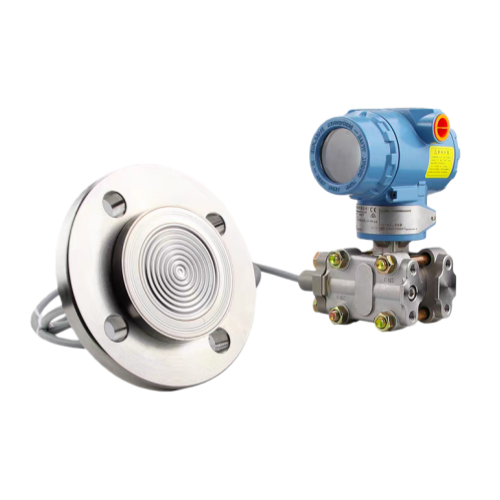
Differential Pressure Transducers: Measure the pressure difference between two distinct points.
Key Features:
High Accuracy: Pressure transducers can detect minute pressure variations with precision as high as 0.075% FS, making them suitable for applications demanding extreme accuracy, such as aerospace and metrology.
Excellent Stability: Modern pressure transmitters utilize advanced materials and technologies, achieving long-term stability exceeding 3 years and maintaining accurate measurements in complex environments.
Strong Interference Resistance: Pressure transmitters maintain reliable performance even in environments with strong electromagnetic interference, making them suitable for diverse industrial settings.
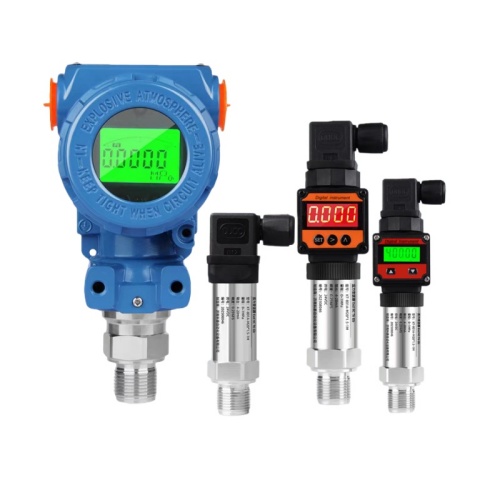
Multiple Output Signals: Pressure sensors typically output standard electrical signals (e.g., 4-20mA, 0-10V), facilitating seamless connection and data transmission with other equipment.
Temperature Compensation: Pressure transmitters incorporate temperature compensation functionality, automatically correcting measurement errors caused by temperature variations to enhance accuracy.
Self-Diagnostic Capability: Pressure sensors perform self-checks to ensure all components function properly and promptly identify potential issues.
Primary Application Fields:
Oil and Gas Industry: Pressure transmitters measure and monitor pressure in oil wells and separators to ensure proper separation of oil and gas and safe production. During pipeline transportation, they monitor internal pressure to prevent leaks and rupture incidents.
Chemical Industry: In chemical production processes, pressure transmitters monitor pressure or liquid levels in reactors, pipelines, and storage tanks to ensure safe and stable reactions. Particularly in high-temperature, high-pressure environments, they provide critical pressure data to prevent accidents caused by excessive pressure.
Power Industry: Within boilers and steam turbines, pressure transmitters measure and regulate pressure to maintain normal operation and power generation efficiency. In power plants, real-time feedback of steam pressure data enables dynamic adjustment of combustion parameters, enhancing boiler efficiency.
Water Treatment and Environmental Monitoring: In water treatment systems, pressure transmitters monitor water pressure within pipelines to ensure unobstructed flow and prevent water quality contamination. In environmental monitoring, they track atmospheric pressure changes for meteorological analysis.
Automation Control Systems: On automated production lines, pressure transmitters often integrate with PLCs (Programmable Logic Controllers) or DCS (Distributed Control Systems) as critical tools for real-time data acquisition, enabling precise process control.
Aerospace: They monitor vital aircraft parameters like oil pressure and air pressure, ensuring equipment functionality during high-altitude flight.
Food and Pharmaceutical Industries: Pressure transmitters monitor and regulate process pressures to guarantee product quality and safety.
Other applicable measurement scenarios for pressure sensors include but are not limited to the above fields.
Pressure sensors play a critical role in modern industry, ensuring production safety and efficiency through precise pressure measurement and control. With ongoing technological advancements, the application scope and accuracy of pressure transmitters continue to expand.
Technical Parameters:
Product Model | BRCN-PCM |
Range | -100Kpa~0~100Mpa(optional) |
Form of pressure | G denotes gauge pressure; J denotes pressure; F denotes vacuum pressure;D denotes Differential Pressure Sensor |
Isolation diaphragm | 316L; Tantalum; HC; PTFE; Other |
Output signal | 4-20mA two-wire system; 4-20mA + HART; RS485 |
Supply Voltage | 24VDC 10~30VDC |
Accuracy Class | ≤ 0.25%,0.5%,0.1%,0.075% |
Operating Temperature | -20℃ ~70℃ ,-20℃~350℃ Optional |
Ambient temperature | -20℃ ~85℃ |
Overload pressure | 150% |
Insulation Resistance | >100M Ω @50V |
Electrical Connection | M20x1.5,G1/2 |
Installation Interface | M20*1.5,G1/2’’; G1/4’’, 1/4’‘NPT,1/2’或其它 |
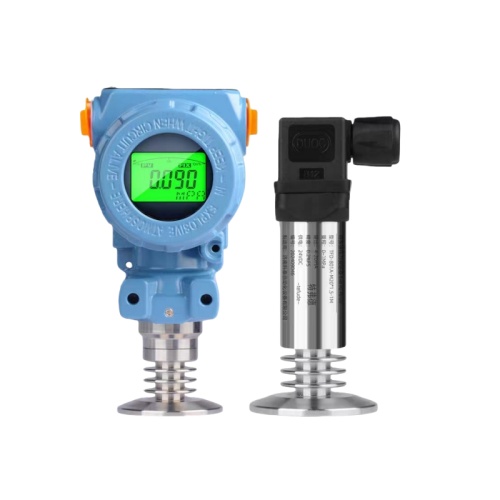
Display Mode | LED or LCD |
Housing Material | Aluminum housing or stainless steel |
Explosion-proof rating | ExdIICT6Gb |
Protection Rating | IP65,IP67 |