- Welcome to Brown instruments (Jiangsu) Co., Ltd official website!

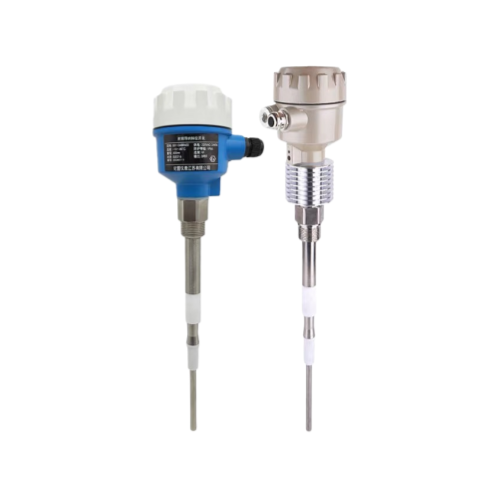
Working Principle:RF admittance level switch is a universal point control instrument. The instrument consists of an electronic unit, a set of explosion-proof housing and a rod or cable sensor. The RF admittance level switch works by generating an electromagnetic field around its probe. When th
Working Principle:
RF admittance level switch is a universal point control instrument. The instrument consists of an electronic unit, a set of explosion-proof housing and a rod or cable sensor. The RF admittance level switch works by generating an electromagnetic field around its probe. When the material level rises to the probe, it changes the admittance (the ability to conduct electric current) of the field. This change is detected by the electronics within the switch, which then sends a signal to indicate the presence of the material. The technology is highly sensitive and can accurately detect the level of various materials, even in challenging environments.
Product Features:
The RF admittance level switch adopts a fully sealed integrated structure design, with internal integrated digital circuits and no mechanical moving parts. Zero point calibration can be completed after one installation without repeated debugging.
It effectively reduces the impact of ambient temperature and humidity on the measurement results through digital circuit design, and there is no need to readjust the zero point when the season changes. The advanced circuit structure can prevent false signals caused by material adhesion to the probe, and resist the influence of various working conditions fluctuations.
The admittance level switch can be widely used in complex field environments such as high temperature, high pressure, high dust and high viscosity, and is suitable for accurate measurement of solid and liquid materials.
Users can quickly complete the one-time zero point setting through digital circuits, simplify the debugging process, and improve work efficiency.
Technical Specifications:
| Power Supply: | 24VAC±5VAC (standard); 220VAC±50VAC 50/60HZ (standard), 110VAC±25VAC 50/60HZ (optional) |
| Output: | DPDT relay (double pole double throw), 4~20mA; |
| Output Capacity: | 220VAC 5A |
| Ambient Temperature: | -40℃~70℃ |
| Medium Temperature: | -100℃~800℃ |
| Resolution: | <0.5PF |
| Repeatability: | <1mm (conductive medium); <10mm (insulating medium) |
| Response Time: | <0.5s |
| Delay: | 1~50s |
| High/Low Alarm: | Field configurable as HLFS (High Level Alarm Mode) or LLFS (Low Level Alarm Mode) |
| Spark Protection (for Sensor): | Built-in spark protection circuit |
| Electrical Interface: | M20*1.5 |
| Cable: | Dedicated connection cable between split electronic unit and sensor: standard 5m, maximum 50m |
| Process Connection: | NPT threaded mounting (standard), flange mounting (optional) |
| Enclosure Protection: | IP66 |
| Probe | |||
| Length | Rod type 150mm Minimum 1300mm Max | High temperature type 150mm Minimum 1300mm Max | Cable type 1000mm Minimum 25000mm Max |
| Wetted Materials: | PTFE shielding section, 304/316L | Ceramic isolator, 304/316L | 304/316L |
| Sealing material | Tetrafluoro | Tetrafluoro | Tetrafluoro |
| Thermal isolation length | L=250mm | L=450mm | optional |
| Extend: | Customized according to user requirements. | ||
On-site footage:
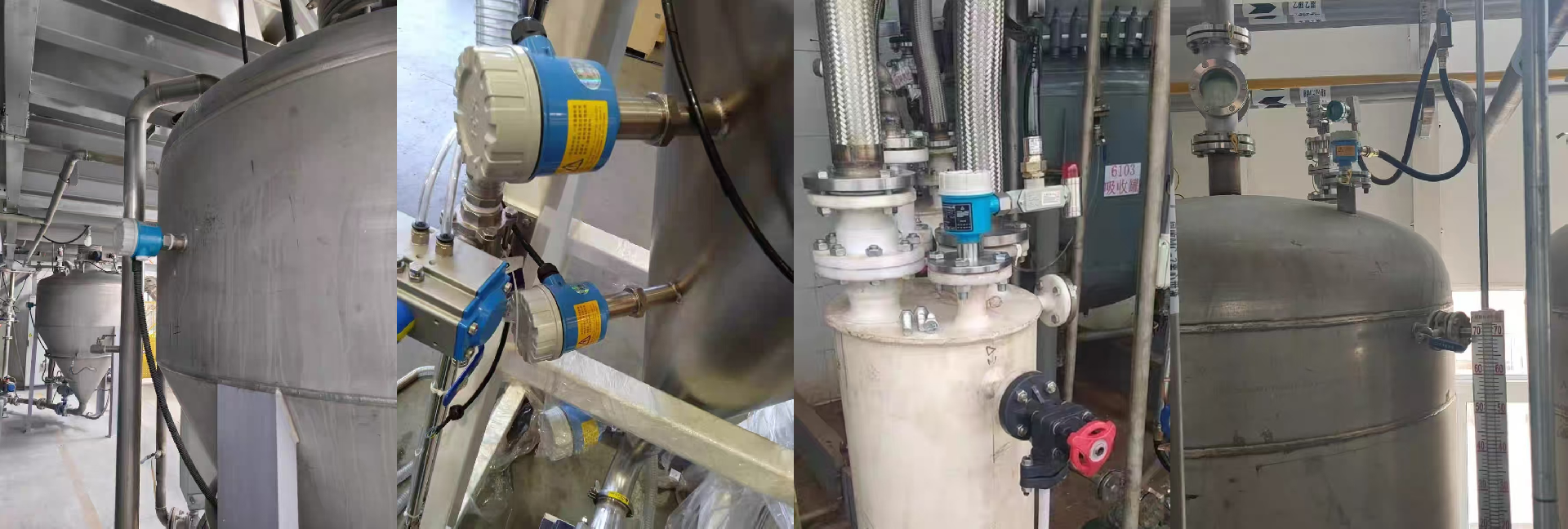
Scenario Applications:
•Power Industry: Coal piles, raw coal silos, fuel silos, pneumatic conveying systems, ash silos, etc.
•Metallurgical Industry: Ore bins, ore crushers, raw material silos, auxiliary material silos, blast furnaces, alumina powder silos, electrolytic cell buffer tanks, etc.
•Chemical Industry: Raw material and intermediate silos, reaction vessels, solid material silos, separators, etc.
•Pulp and Paper Industry: Raw material silos, storage towers, drying drums, chemical storage silos, etc.
•Cement Industry: Aggregate silos, raw material silos, cement silos, pulverized coal silos, slag storage silos, etc.
•Other Industries: Quarries, food processing, pharmaceuticals, environmental protection, shipbuilding, etc.