- Welcome to Brown instruments (Jiangsu) Co., Ltd official website!

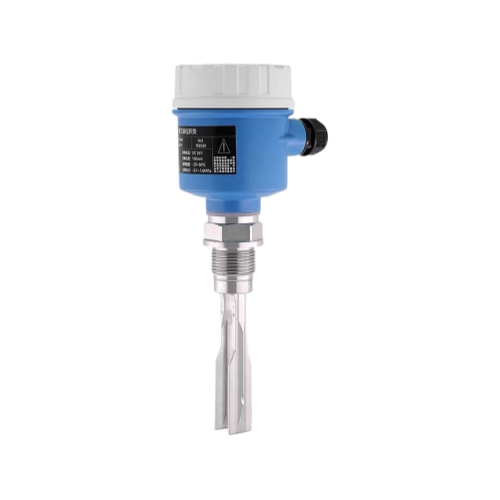
Working Principle:The working principle is based on the physical resonance phenomenon. When the vibration of the tuning fork is affected by the liquid medium, its vibration frequency changes, triggering the switch. The built-in vibration sensor of the tuning fork level switch can precisely detect c
Working Principle:
The working principle is based on the physical resonance phenomenon. When the vibration of the tuning fork is affected by the liquid medium, its vibration frequency changes, triggering the switch. The built-in vibration sensor of the tuning fork level switch can precisely detect changes in vibration frequency. When the liquid medium contacts the tuning fork, the density and viscosity of the liquid affect the vibration frequency of the tuning fork, thereby altering its resonance state. The tuning fork level switch detects this change and triggers the switch action based on the set threshold.
Measurement Characteristics:
tuning fork level switches have a simple structure with no moving parts, avoiding the wear and jamming issues associated with float-type switches. This results in a lower failure rate and a longer service life .
High Sensitivity
Tuning fork level switches can respond to very small changes in liquid levels, making them ideal for applications requiring precise level control. For instance, in chemical reactors, high or low liquid levels can lead to serious safety issues.
Wide Applicability
Tuning fork level switches are suitable for a wide range of liquid media, including water, oil, acidic and alkaline solutions, and chemicals. They are not influenced by the liquid’s conductivity, temperature, or viscosity .
Simple Installation
Tuning fork level switches can be directly installed into containers or pipelines using threads or flanges, with simple installation processes that do not require complex adjustments .
When selecting , it is essential to consider the on-site operating conditions and the characteristics of the liquid medium. The following are the key factors to consider during selection:
•Operating Conditions
When selecting, the process pressure, temperature, and the chemical properties of the medium must be confirmed. Different liquid media may require with different materials, temperature, and pressure resistance . For high-temperature and high-pressure conditions, a tuning fork level switch made from heat-resistant and corrosion-resistant materials may be necessary.
•Installation Method
Tuning fork level switches can be installed horizontally or vertically. When installed horizontally, the face of the tuning fork should be parallel to the direction of liquid rise or flow, avoiding the impact of liquid flow direction on the tuning fork . Additionally, the installation position should avoid areas near the feed inlet to prevent damage caused by liquid impact.
•Limit Alarm Function Settings
Tuning fork level switches generally offer overflow protection and dry-run protection alarms. The high and low limit settings (High/Low) should be adjusted according to the actual process requirements to ensure that the level switch triggers the alarm or control signal at the appropriate liquid level .
Technical Specifications:
| Measured medium | Liquid, powder, or granular solid |
| Temperature Range | -20℃ ~ +200℃ |
| Ambient temperature | -20℃ ~ +80℃ |
| Pressure Range | Less than 4 MPa |
| Housing Material | aluminum alloy |
| Explosion-proof rating | ExdIICT6Gb |
| Protection Rating | IP66 |
| Ambient humidity | 95%RH |
| Connection Method | G1/2”, G3/4”, G1”, Customized |
| Wetted material | 316L stainless steel, titanium, PTFE, zirconium, tantalum, PFA, etc. |
| Supply Voltage | DC24V AC220V 50Hz |
| Electrical interface | M20*1.5 |
| Tuning fork vibration frequency | 300±50Hz |
| Output signal | Relay DPDT |
| Response tim | 1 second |
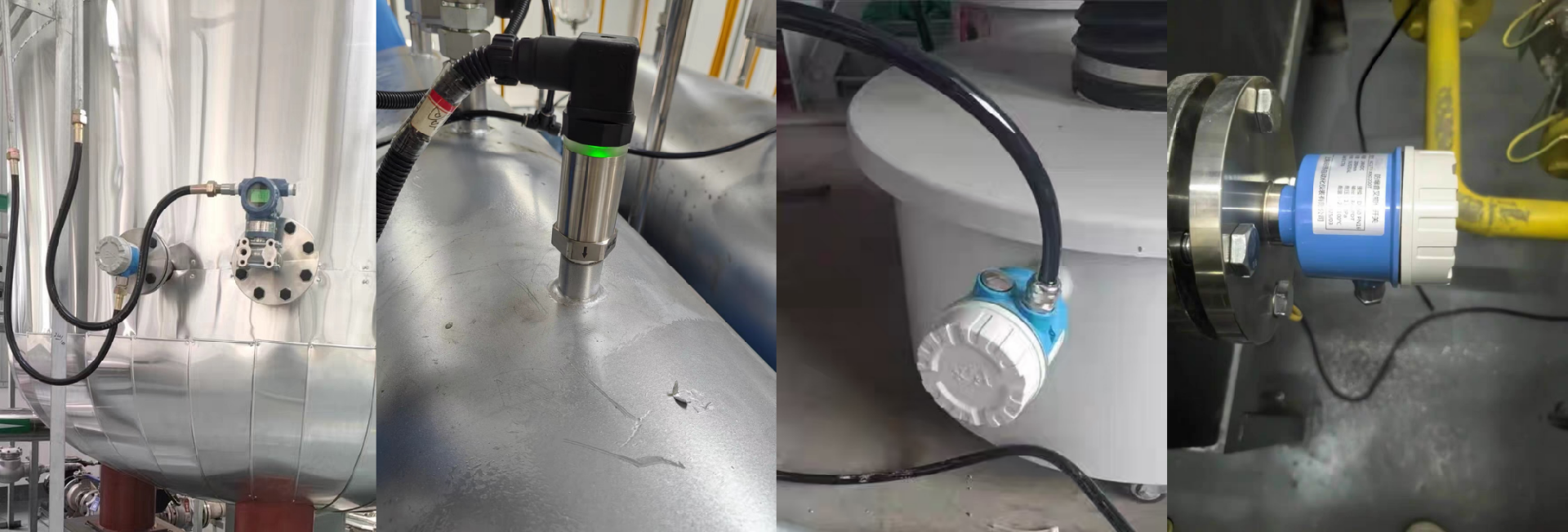
On-site footage:
Application Industries:
•Power plant: coal pile, raw coal bunker, fuel bunker, water storage tank, exhaust gas purification tank, bunker pump, fly ash, ash storage, oil tank, etc.;
•Oil field: crude oil or finished oil storage tank, three-phase separator, sedimentation tank, sewage tank and oil-water interface, drilling mud tank, etc.;
•Chemical industry: detection of polyester, spandex, acid, alkali, crude oil distillation tower, raw material and intermediate bunker, reaction tank, ammonia tank, solid bunker, separator, etc.;
•Metallurgy: ore bunker, ore crusher, raw material bunker, auxiliary material bunker, blast furnace, alumina powder bunker, electrolytic cell buffer tank, etc.;
•Cement: stone bunker, raw material bunker, cement bunker, coal powder bunker, slag storage bunker, etc.;
•Papermaking: raw material bunker, storage tower, drying drum, chemical material storage bunker, etc.;
•Water treatment: reservoir, sewage tank, water treatment tank, sedimentation tank, deep well, drinking water network chromium, etc.;
•Flour mill: detection of flour and wheat grain level;
•Boiler plant: Detect drum water level and other pressure vessel liquid levels;
•Feed mill: detect soybean meal level;
•Glass mill: detect quartz sand and broken glass level;
•Construction machinery: detect cement silo level;
•Foundry machinery: detect sand level;
•Hydraulic machinery: detect lubricating oil level;
Installation Notes:
The tuning fork limit switch is usually installed sideways (on the side of the silo wall) to detect the upper and lower limits of the material level height on the side wall of the silo;
When it is inconvenient to open a hole on the side of the silo, it can be installed top-mounted (on the top of the silo). The position should be selected to avoid the impact of the material during feeding;
It can also be installed on the pipeline to prevent the pump from running without material.
When installing the sensor, insert it into the tank, clamp the hexagonal part of the upper part of the sensor thread with a wrench and tighten it. Be careful not to twist the junction box housing by hand, because the junction box housing and the probe rod will rotate during the tightening process. The connecting cable between the electronic unit and the sensor inside the housing has been connected at the factory. Tightening the housing hard will break the internal connecting cable.